Statutory Increases, Day‑One Rights and the Fair Work Agency: What April Really Means for SMEs
Statutory Increases, Day‑One Rights and the Fair Work Agency: What April Really Means for SMEs
April’s statutory increases are landing at the same time SMEs are juggling tight budgets, rising costs, and teams that need clarity more than ever. It’s a challenging backdrop — and these reforms add new layers of responsibility that employers can’t afford to overlook.
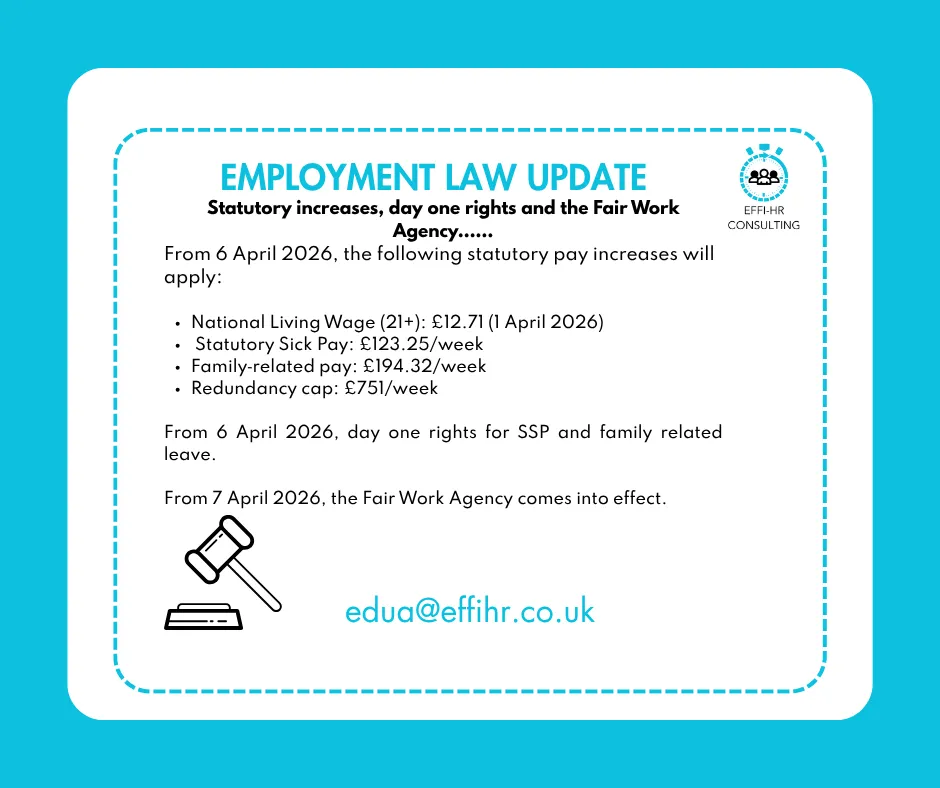
From 1–6 April 2026, several major changes take effect across pay, leave and enforcement.
Key Statutory Increases for April 2026
National Living Wage & Minimum Wage (from 1 April 2026)
£12.71 per hour for workers aged 21+
£10.85 for ages 18–20
£8.00 for 16–17 and apprentices
These increases add immediate payroll pressure, especially for hospitality, retail and care‑based SMEs.
Statutory Sick Pay (from 6 April 2026)
£123.25 per week, or 80% of average weekly earnings (whichever is lower)
Payable from day one of sickness
Lower Earnings Limit removed
This significantly expands eligibility — particularly for part‑time and variable‑hours workers.
Family‑Related Statutory Payments (from 6 April 2026)
£194.32 per week for maternity, paternity, adoption, shared parental and parental bereavement pay (after the initial 6‑week 90% period for maternity/adoption)
Statutory Redundancy Pay & Tribunal Limits (from 6 April 2026)
Statutory cap on a week’s pay: £751
Maximum statutory redundancy payment: £22,530
These increases affect redundancy budgeting, settlement discussions and tribunal exposure.
Day‑One Rights: What Changes on 6 April 2026
Employees now gain day‑one access to:
Statutory Sick Pay
Paternity leave
Unpaid parental leave
This removes long‑standing service thresholds and increases the likelihood of short‑notice leave requests.
The Fair Work Agency: A New Era of Enforcement
From 7 April 2026, the Fair Work Agency becomes the UK’s single enforcement body for:
National Minimum Wage
Holiday pay
Agency worker protections
Labour exploitation
Enforcement becomes sharper, more coordinated and more proactive — meaning SMEs must ensure their basics are watertight.
What Matters Most for SMEs This April
• Update pay rates and payroll
Ensure NLW/NMW, SSP and statutory payment increases are applied correctly.
• Refresh contracts, handbooks and working time records
Day‑one rights and SSP reforms must be reflected in documentation and processes.
• Make sure managers can explain the changes confidently
A short briefing or script helps avoid confusion and inconsistent handling.
• Tighten compliance before the Fair Work Agency does it for you
Holiday pay accuracy, minimum wage compliance and record‑keeping will be under closer scrutiny.
A Steady Reminder for Employers
In uncertain times, fairness and clarity aren’t just legal requirements — they’re stabilisers. Small, practical steps now will keep your business compliant, confident and ready for whatever comes next.
If you need support getting April‑ready, I’m helping SMEs put practical, risk‑reducing steps in place.
